
35 Engagement Photo Poses for Natural, Romantic Couple Photos
Published
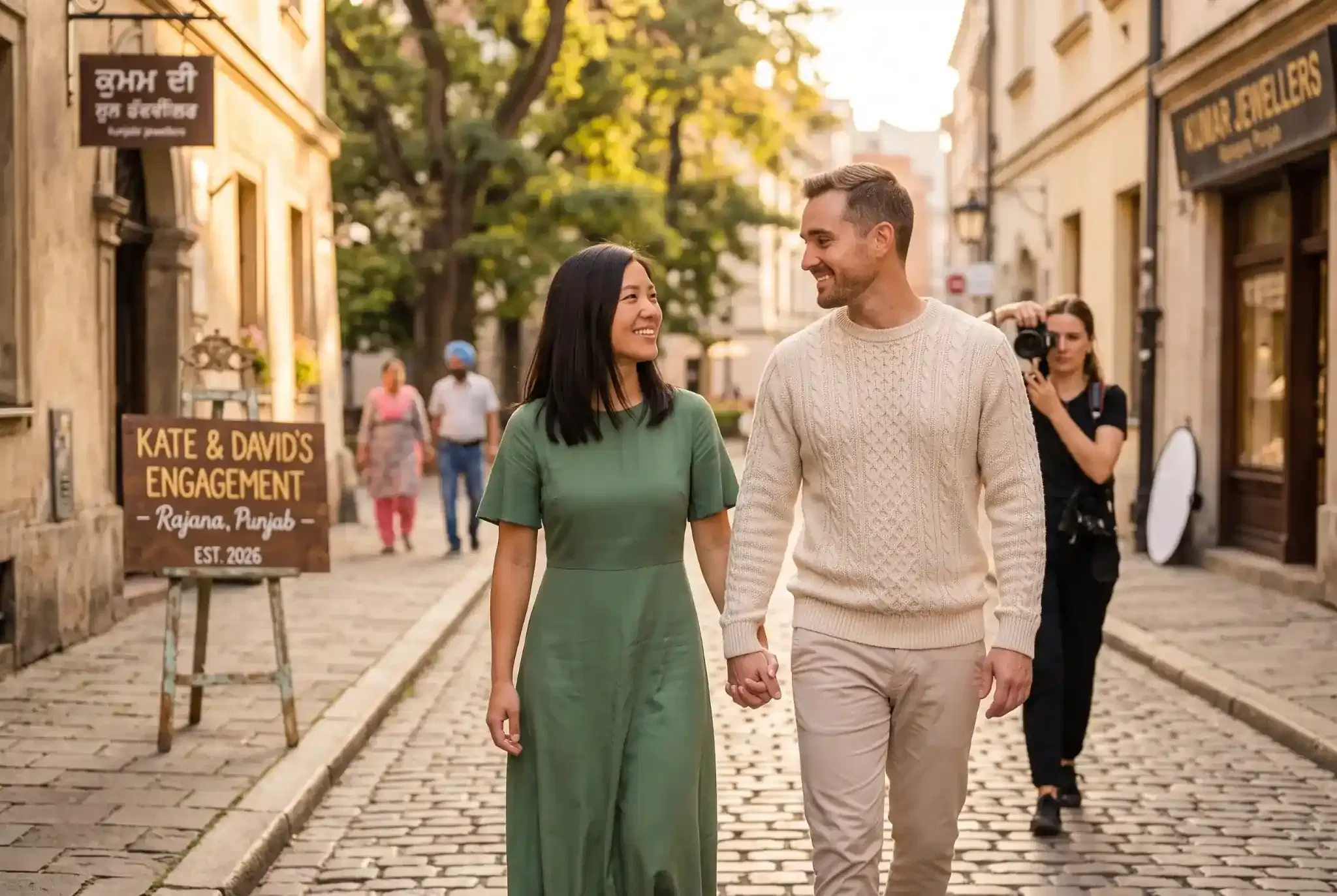
The best engagement photo poses do not look stiff or overly rehearsed. They give you a simple starting point, create natural movement, and leave room for genuine laughter and affection. Whether you are planning a city session, a beach shoot, a cozy indoor session, or sunset portraits in a park, these pose ideas will help you create a varied gallery that feels like you. For a wider list of concepts organized by style and season, see our 50 engagement photo ideas. You can also browse the full Engagement Photos section for related planning guides.
Use this guide as a collection of prompts rather than a strict checklist. A skilled photographer can adapt every pose to your personalities, outfits, location, and comfort level.
1. Walk Hand in Hand
Start with an easy movement-based pose. Walk slowly toward the camera while holding hands and looking at each other. Try one pass while talking normally, another while looking forward, and a final pass with one partner gently pulling the other closer.
This pose is especially effective on a beach, a quiet trail, a city sidewalk, or any location with leading lines.
2. Forehead-to-Forehead
Stand close with your foreheads touching. Keep your shoulders relaxed and close your eyes for a quiet, intimate frame. You can also look at each other and smile for a more connected expression.
Ask the photographer to capture both a close-up and a wider portrait that shows the surroundings.
3. The Classic Embrace
Face each other and wrap your arms around one another. Instead of holding perfectly still, sway gently, whisper something funny, or take a slow breath together. Small movements make the embrace feel more natural.
For a flattering composition, keep your hands visible and place them gently on the waist, shoulder, or upper back rather than gripping clothing.
4. One Partner Behind the Other
Have one partner stand slightly behind the other and wrap their arms around the front partner’s waist. The person in front can rest their hands over those arms while both of you look toward the camera or at each other.
This pose creates a warm, relaxed image and works well when you want to highlight the engagement ring.
5. Show the Engagement Ring
Bring your hands together near the center of the frame, with the ring facing the camera. Keep the moment connected by leaning into each other or resting your heads together.
A ring-focused portrait is a useful detail image, but it should be part of a larger story rather than the only close-up in the gallery.
6. Nose-to-Nose Smile
Touch the tips of your noses and smile. This playful pose usually creates an authentic reaction, especially when the photographer asks you to hold the position for only a few seconds.
Try a serious version first, then laugh together. The second frame is often the favorite.
7. Almost Kiss
Lean toward each other without fully kissing. Pause just before your lips meet and hold the moment for a few seconds. This creates romantic tension without requiring a dramatic pose.
For a softer image, turn your faces slightly toward the best available light.
8. A Real Kiss
Capture a gentle kiss on the lips, cheek, or forehead. Keep the pose simple and focus on the connection rather than the camera.
A forehead kiss often feels particularly tender. A cheek kiss can create a playful, joyful portrait.
9. The Shoulder Lean
Stand side by side and have one partner lean their head on the other’s shoulder. Hold hands or link arms. Look toward the camera for a classic portrait, then look away for a more candid variation.
This is a comfortable option if you are nervous in front of the camera.
10. Slow Dance
Hold each other as if you are slow dancing. You do not need music. Sway gently, turn in a small circle, and let your expressions change naturally.
This prompt produces movement in clothing and hair, which can make the final images feel more alive.
11. Spin or Twirl
Ask one partner to gently spin the other. The person being spun can lift the edge of a dress, let a jacket move, or simply laugh during the turn.
Use this pose only where there is enough space and stable ground. It works best as a short action rather than a long hold.
12. Sit Close Together
Sit on a bench, blanket, steps, or a low wall. Keep your bodies angled toward each other instead of facing straight ahead. Lean in, hold hands, or rest your head on your partner’s shoulder.
A seated pose adds variety to a gallery and can make the session feel less formal.
13. Lie on a Blanket
For a relaxed outdoor image, lie on a blanket with your heads close together. Look at each other, look toward the camera, or close your eyes while smiling.
Photographers can capture this pose from directly above or from a low angle across the blanket. Check the ground first for comfort and safety.
14. Walk Away Together
Hold hands and walk away from the camera. Look back at one another, raise your joined hands, or let one partner lead the other along a path.
This pose is ideal for showing a beautiful location, a long dress, or a dramatic sunset. If you are choosing a date around the weather, explore our seasonal engagement photo guides.
15. The Piggyback Laugh
One partner gives the other a piggyback ride while both of you laugh. It is a fun option for couples who want a playful image that feels less traditional.
The photographer should take several frames quickly because the best expression usually happens during the movement.
16. Partner Lift
If it feels comfortable and safe, one partner can lift the other for a brief moment. Keep the lift simple and close to the ground. A small lift at the waist often looks more natural than a dramatic pose.
Skip this idea if either partner has an injury, restrictive clothing, or any concern about balance.
17. Sit Between Your Partner’s Knees
Have one partner sit between the other’s knees while leaning back against their chest. Hold hands across the front or place a hand over the engagement ring.
This works well for picnic sessions, cozy home shoots, and relaxed portraits in a park.
18. Look in the Same Direction
Stand close together and look toward the horizon, city skyline, mountains, or water. Keep your bodies connected through linked arms or touching shoulders.
This pose shifts attention from a direct camera portrait to the shared experience of the engagement session.
19. Back-to-Back
Stand back-to-back with your shoulders touching. You can look toward the camera, look in opposite directions, or turn your heads toward one another.
The pose creates a clean editorial frame and is a useful option between more intimate images.
20. Play With the Veil, Jacket, or Dress
If one partner is wearing a flowing dress, veil, coat, or scarf, use the fabric as part of the movement. Walk, turn, or let the photographer create a gentle breeze.
The clothing should support the pose rather than cover your faces or become the only focus of the image.
21. Use a Doorway or Arch
Frame the couple inside a doorway, arch, gate, or covered walkway. Stand close and let the structure create a natural border around you.
This composition is particularly useful for architectural locations and indoor engagement photos. For more setting-specific ideas, browse our guide to engagement photo locations.
22. The Kitchen or Home Hug
At home, cook together, make coffee, read on the sofa, or hug near a window. Lifestyle engagement photos become more personal when they include activities that are genuinely part of your relationship.
Avoid pretending to perform an activity you would never normally do. Authentic details are more valuable than elaborate props.
23. Share a Drink
Raise coffee cups, champagne glasses, or a favorite nonalcoholic drink for a simple celebration image. Keep the moment moving by making a toast, clinking glasses, or taking a sip together.
Always follow the rules of your location when using drinks or props.
24. Read a Love Note
One partner can read a short note while the other listens. The note may be a private letter, a meaningful quote, or a few sentences written for the session.
This prompt often creates genuine expressions without asking you to “act romantic.”
25. Use a Meaningful Prop
Bring one object that represents your relationship, such as a bicycle, record player, family blanket, travel map, or favorite book. Use the prop naturally and keep it secondary to the couple.
One meaningful object is usually more effective than several unrelated decorations.
26. Run Toward Each Other
Begin several steps apart and walk or jog toward one another. Meet in a hug or hold hands at the center. The photographer can capture the approach and the moment of connection.
Choose a clear, safe area and use this pose only if both partners feel comfortable moving in their outfits.
27. The City Crossing
For an urban session, walk together across a quiet crosswalk or along a sidewalk. Hold hands, carry a bouquet, or look at each other while moving.
The photographer should prioritize safety and follow local rules. Never step into traffic for a photograph.
28. Frame the Ring With Your Faces
Bring your joined hands close to the camera while your faces remain softly visible in the background. This combines a ring detail with a portrait of the couple.
A wide aperture can help separate the ring and faces, but the image should remain clear enough to understand the moment.
29. The Quiet Close-Up
Stand close and focus on each other rather than the camera. Capture a forehead touch, a soft smile, or a gentle cheek kiss.
Close-ups are strongest when the couple relaxes their jaw, lowers their shoulders, and takes a few slow breaths before the frame is made.
30. Laugh on Cue
Ask the photographer to give you a deliberately silly prompt, such as making up a new name for your future pet or saying what your partner ordered on your first date. The goal is not to force a laugh. It is to create a real reaction.
This is one of the easiest ways to add warmth to an engagement gallery.
31. The Reflection Pose
Use a mirror, shop window, puddle, or calm body of water to create a reflection. Stand close together and vary the angle until the reflection complements rather than distracts from the main image.
Check the background carefully because reflections reveal more of the scene than a standard portrait.
32. Silhouette at Sunset
Stand close together against a bright sunset and create a silhouette through a kiss, forehead touch, or hand-holding pose. Keep the outline simple so the gesture remains recognizable.
The photographer may expose for the sky, which will intentionally make the couple darker in the frame.
33. Umbrella in the Rain
If rain is part of the day, share an umbrella and walk slowly. Look at each other, lean in for a kiss, or let one partner hold the umbrella while the other laughs.
Protect camera equipment and choose a safe surface. Wet-weather photos should never compromise comfort or safety.
34. Hold Hands With Space Between You
Stand several feet apart while keeping your hands connected. Face one another, look away, or create a gentle pull toward the center.
This pose gives the image negative space and works beautifully in open fields, on beaches, and in modern architectural settings.
35. End With a Candid Moment
Finish the session by walking, talking, hugging, or simply spending a minute together without posing. Ask the photographer to keep shooting from a respectful distance.
The final image may not be perfectly symmetrical, but it can become the most meaningful photograph because it records how you naturally interact.
How to Make Engagement Photo Poses Look Natural
A pose becomes natural when it includes a small action. Walk instead of standing rigidly. Sway instead of holding an embrace perfectly still. Whisper something instead of smiling at the camera for every frame.
Keep your hands active but relaxed. Touch the waist, hold hands, smooth a jacket, adjust a sleeve, or rest a hand on a shoulder. Avoid tightly gripping clothing or hiding both hands behind your body.
Change your focus throughout the session. Photograph some frames looking at the camera, some looking at each other, and some looking into the distance. This creates a balanced gallery with both classic portraits and candid moments.
What to Wear for Engagement Photos
Choose clothing that lets you move comfortably. For detailed coordination advice, see our guide to what to wear for engagement photos. Coordinate colors without wearing identical outfits. Neutral tones, soft earth colors, denim, and muted patterns are usually easy to combine across outdoor and indoor locations.
Avoid very small patterns that may distract from faces. If one outfit has a strong pattern, the other can balance it with a solid color. Bring a second layer or outfit only if changing is practical and allowed at the location.
How Many Poses Should You Plan?
You do not need 35 separate poses in one session. A photographer can usually build several variations from one prompt. For example, a hand-in-hand walk can produce images facing the camera, looking at each other, walking away, and stopping for a kiss.
Plan approximately six to ten primary prompts for a typical session. Allow time for location changes, outfit adjustments, genuine interactions, and creative variations.
Related guides
- Engagement ring photo ideas and poses
- Funny engagement photo ideas
- Save the date photo ideas
- Plus size engagement photo tips
Frequently Asked Questions
What are the best engagement photo poses for shy couples?
Start with movement-based prompts such as walking hand in hand, slow dancing, sitting together, or sharing a drink. These activities give you something to do and reduce the pressure to hold a perfect pose.
How do you pose for engagement photos without looking awkward?
Keep your bodies connected, relax your shoulders, and use small movements. Look at each other instead of staring at the camera in every image. A photographer can also give you short prompts instead of asking you to “pose.” Our engagement photo shoot guides cover practical planning details for the session.
Should we look at the camera in engagement photos?
Yes, but not in every image. Include a few direct portraits for invitations, announcements, or framed prints. Mix them with photographs that show you looking at each other, walking, laughing, or sharing a quiet moment.
What should we bring to an engagement photo session?
Bring your engagement ring, a second outfit if appropriate, comfortable shoes, water, touch-up items, and one or two meaningful props. Check the location rules before bringing food, drinks, pets, furniture, or decorations.
How can we include our dog in engagement photos?
Begin with a few photos of the couple and dog together, then ask a helper to take the dog for some couple-only portraits. Use simple prompts such as walking, sitting together, or giving the dog a treat. Keep the animal comfortable throughout the session.
Final Tip
The strongest engagement pictures show connection rather than perfect posing. Choose prompts that feel like something you would genuinely do together, then let your photographer adjust the position, lighting, and composition. A relaxed couple with real interaction will create more memorable images than a long list of complicated poses.
Engagement Photo Guide Team
Editorial Team
The Engagement Photo Guide team writes practical guides on engagement photo ideas, poses, outfits and locations to help couples plan a shoot they will love.