Engagement Rings / Diamond Shapes
Emerald Cut Engagement Rings: Complete Buying Guide (Ratios, Clarity & Settings)
Published October 8, 2026
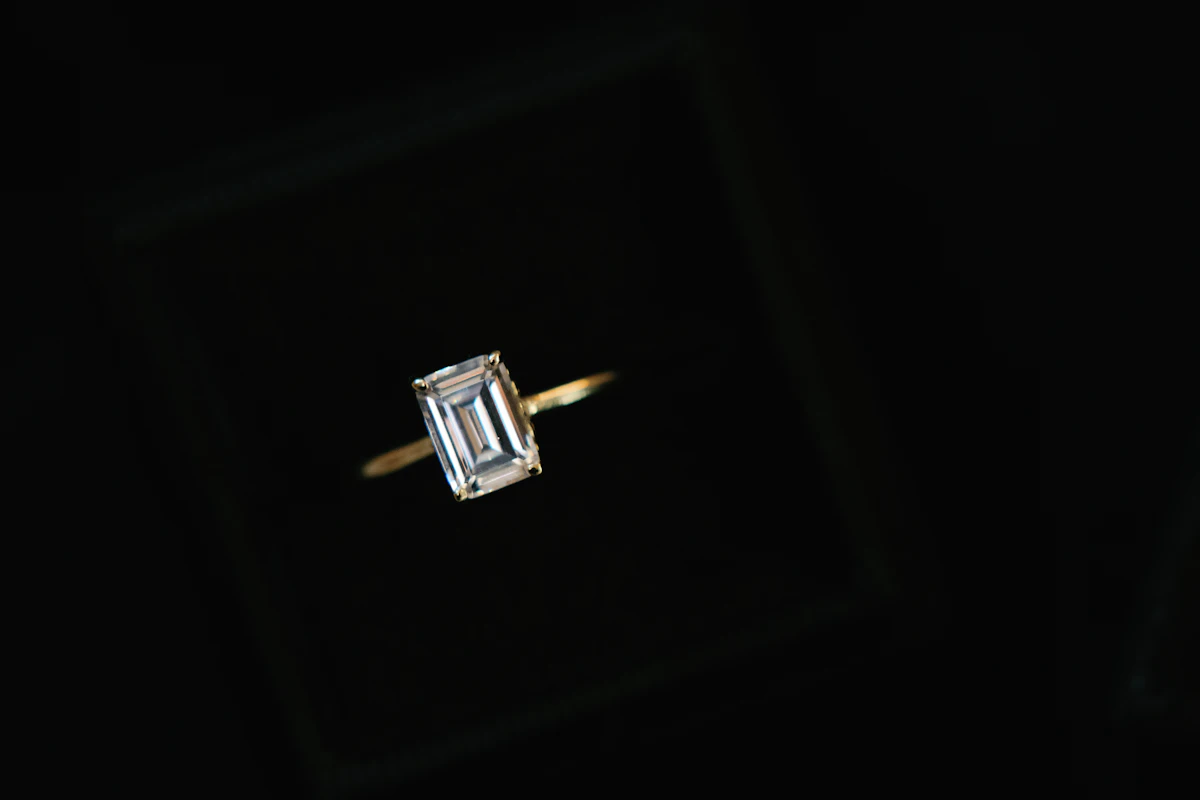
Emerald cut engagement rings have a quiet, architectural kind of glamour. Instead of the sparkle-everywhere look of a round diamond, an emerald cut shows long, clean flashes of light and a glassy, open center often called the "hall of mirrors" effect. It is a favorite for couples who love Art Deco style, minimal design or simply something a little different.
This guide explains how the emerald cut works, which proportions and grades matter most, the best settings, and how it compares with other popular shapes. New to diamond shapes? Start with our overview of engagement ring shapes.
What is an emerald cut diamond?
An emerald cut is a rectangular diamond with cut corners and step-cut facets: long, parallel facets that run along the sides like stairs. Most emerald cuts have roughly 50 to 58 facets. The name comes from the technique originally used to cut emerald gemstones, which needed a shape that reduced stress on the stone.
Because the facets are large and open, an emerald cut does not scatter light into tiny sparkles the way brilliant cuts (round, oval, pear) do. Instead, it produces broad flashes of light and contrast between light and dark planes.
Pros and cons of emerald cut engagement rings
| Pros | Cons |
|---|---|
| Elegant, timeless and distinctive look | Shows inclusions more easily than brilliant cuts |
| Elongated outline flatters the finger | Less fiery sparkle than round or oval |
| Usually costs less per carat than a round diamond | Color can be more visible in lower grades |
| Cut corners help reduce chipping | Needs a well-cut stone to avoid a dull, "windowed" look |
Best length-to-width ratio
The length-to-width ratio controls how long or square the stone looks. Most buyers choose between 1.30 and 1.50:
- 1.30 to 1.40: a slightly shorter, classic rectangle.
- 1.40 to 1.50: the most popular range; noticeably elongated and elegant.
- Above 1.50: a long, slender look that can appear larger on the finger.
If you prefer a square step cut, look at an Asscher cut instead; it is essentially a square version of the emerald cut.
Clarity: the most important grade for emerald cuts
The open, mirror-like table acts like a window into the diamond, so inclusions are easier to see than in a brilliant cut. Many buyers aim for VS2 or higher and always check that the specific stone is eye-clean. In larger stones, VS1 or better is a safer choice. Always review high-resolution photos or video rather than relying on the grade alone.
Color: what to choose
Step cuts can show body color a little more than brilliant cuts. For white gold or platinum settings, many people choose G or H color. In yellow or rose gold, a slightly warmer stone (I or J) can look perfectly white against the metal and save money. Learn more in our guide to engagement ring metals.
How much does an emerald cut diamond cost?
Emerald cuts usually cost less per carat than round diamonds of similar quality, because cutting them wastes less of the rough crystal. The final price still depends mostly on carat, clarity, color and whether the diamond is natural or lab-grown. For full budgeting advice, see how much an engagement ring should cost, and for size guidance read our diamond carat size guide.
Best settings for emerald cut engagement rings
- Solitaire: a simple four-prong solitaire lets the clean lines speak for themselves. See solitaire engagement rings.
- Three stone: emerald cut center with tapered baguettes or trapezoid side stones is a classic Art Deco look. See three stone engagement rings.
- Hidden halo: adds sparkle from the side without changing the clean top view. See halo and hidden halo rings.
- East-west setting: the stone sits horizontally across the finger for a modern twist.
- Bezel: a sleek, protective option for active lifestyles. See bezel engagement rings.
Emerald cut vs other shapes
| Shape | Facet style | Sparkle | Best for |
|---|---|---|---|
| Emerald cut | Step cut | Broad flashes, glassy look | Elegant, vintage-inspired style |
| Radiant cut | Brilliant cut | High sparkle | Rectangular shape with more fire |
| Oval | Brilliant cut | High sparkle | Elongated look, maximum size appearance |
| Asscher | Step cut | Broad flashes | Square Art Deco look |
Compare them in detail: radiant cut engagement rings and oval engagement rings.
Tips for buying an emerald cut engagement ring
- Prioritize clarity and an eye-clean stone over a bigger carat weight.
- Check the corners are evenly cut and the outline is symmetrical.
- Look for a bright, even pattern of step facets without a large dark area in the center.
- Choose a ratio that suits your finger length and personal taste.
- Ask for a grading report from an independent lab such as GIA or IGI.
Planning to share your new ring online? Get ideas from our engagement ring photo ideas.
Frequently asked questions
Are emerald cut engagement rings still in style?
Yes. Emerald cuts are a timeless choice with strong roots in Art Deco design, and they remain popular with couples who prefer elegant, understated sparkle.
Do emerald cut diamonds look smaller?
Not usually. Their elongated rectangular outline can look as large as or larger than a round diamond of the same carat weight, especially with a ratio around 1.40 to 1.50.
What clarity is best for an emerald cut diamond?
VS2 or higher is a common recommendation, but the most important thing is that the specific diamond is eye-clean, because the open step facets reveal inclusions easily.
Is an emerald cut the same as an emerald gemstone?
No. Emerald cut describes the shape and faceting style. An emerald is a green gemstone. If you love green stones, see our guide to emerald engagement rings.
Engagement Photo Guide Team
Editorial Team
The Engagement Photo Guide team writes practical guides on engagement rings, proposal ideas and engagement photos to help couples plan every step with confidence.